 UGC
UGCUGC · Mar 2026
A working library of opening lines and visual setups that we’ve seen scale across categories — fitness, wellness, fragrance, fashion. With examples and what each one signals.
 UGC
UGC⏤ Summarize with AI
Open this article in your favourite chatbot for a 3-bullet summary.
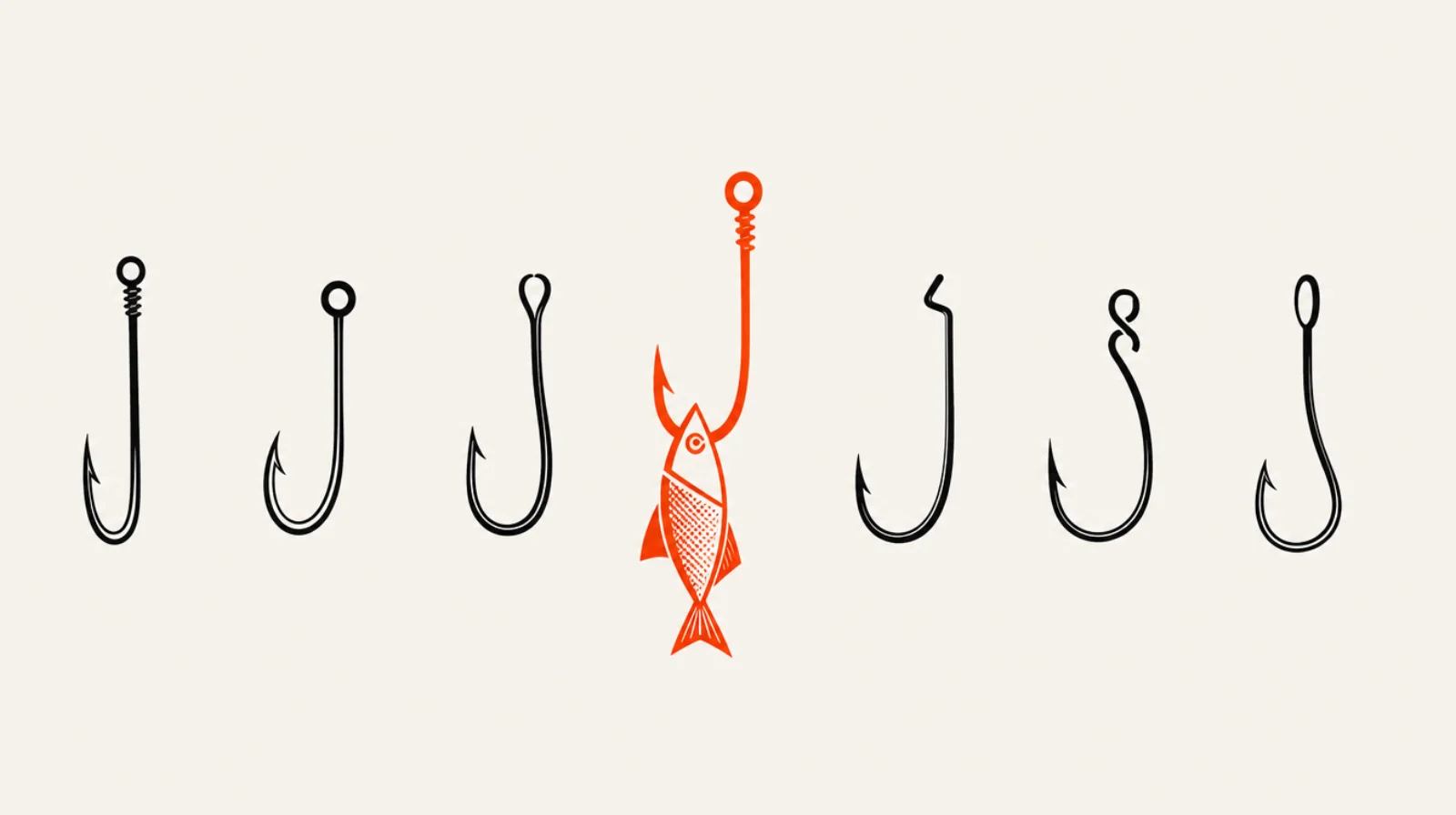
“Make better hooks” is one of those notes that means everything and nothing. Here are seven frameworks we keep coming back to — with what each one is actually doing to the viewer’s brain.
The 7 highest-converting UGC hook frameworks for India D2C in 2026 are: (1) pattern interrupt, (2) "I tried it for 30 days", (3) problem-named (cortisol), (4) reaction-first, (5) "I switched from ___", (6) founder-led "why this exists", and (7) unexpected use case. Pick at least 4 of the 7 per shoot day, tag every ad with the framework it uses, and test 3+ hook variants per creative before declaring fatigue.
A visual or audio cue that doesn’t belong in the feed. Mid-conversation start, an unexpected object, a hard cut to silence. Doesn’t inform — just makes the thumb pause.
Example: creator opens with “Stop using your serum like this.” No setup, no intro. The frame mismatch is the hook.
Anchors the viewer in a clear payoff structure. The brain sticks around for the result. Works especially well for skincare, fitness, wellness, anything with a “before/after” story.
Variants: 7 days, one week, one month, 90 days. The timeframe should match the believable category result.
Names the customer’s feeling before the customer can. “If you’re tired at 4pm, that’s not laziness. That’s cortisol.” Works because the viewer feels seen — and a seen viewer doesn’t scroll.
Instead of telling the viewer what to feel, show someone feeling it. First frame is a face — surprise, laugh, head-tilt — and only then the product. We’ve seen this format outperform every other in fragrance and food, where the experience is hard to describe.
Comparison without naming. A creator showing the brand they used to wear / use / drink, then the moment of switch. Gives the viewer permission to change and a clear reason why.
Watch out for: trademark / disparagement issues if the previous brand is named on screen. Most performant version is the one where the previous product is in frame but unbranded.
30–60 seconds of the founder explaining what was broken in the category and what they made instead. Cheapest CPM hook in our portfolio. Almost never wins on CTR but consistently wins on downstream CVR.
Why it works: founders are the only people on the feed unambiguously selling their own thing. Customers know it. Trust compounds.
Take the product out of its category context. A wellness tea brewed for an office afternoon, a fragrance worn to bed, sneakers used for a 16-hour airport day. Curiosity beats description.
At least 3 hook variants per ad before declaring the creative fatigued — same body, same CTA, different opening 2 seconds. Most creatives that look like they failed actually have a hook problem, not a creative problem. On a single shoot day, brief the creator to shoot 3 hooks back-to-back for the same script.
Pattern interrupt and the problem-named (cortisol) hook tend to be the cheapest CPMs in our portfolio across categories. Founder-led has the lowest CTR but the highest downstream CVR — it doesn't win on the click, it wins on the purchase. For first-time category buyers (skincare, supplements, wellness tea), the 30-day-try framework outperforms everything else.
Hooks fatigue 2–3x faster than the rest of the creative. The earliest fatigue signal is the 3-second view rate dropping 10%+ over 5 days while spend is held flat. When a hook category fatigues across multiple products, rest the category for 3–4 weeks before bringing it back — fatigued hooks almost always revive.
Under 2 seconds for the opening frame; under 5 seconds for the full hook to land. Meta's algorithm reads the 3-second view rate as the primary engagement signal, and the human brain decides to scroll past inside 1.5 seconds. The hook is everything before the viewer commits — keep it tight.
Yes — the framework travels, the execution doesn't. "If you're still using ___, stop" works as a talking-head opener, as text-on-screen over a demo, and as a mid-conversation reaction line. Run the same hook framework across 3 formats simultaneously and you'll often see one format win on CTR while another wins on CVR — that's a healthy account, not a problem to solve.
Yes. Meta hooks fight for the first 2 seconds of feed scroll — pattern interrupt and reaction-first dominate. Google (YouTube) hooks fight for the first 5 seconds before skip — problem-named and "I tried it for 30 days" frameworks outperform because the viewer has already committed to watching. Don't recycle Meta hooks into YouTube ads without rewriting the opening beat.
Hooks are the lever that resets rising CPMs and the reason creative is the new targeting. For the full D2C marketing picture, start with our founder’s pillar guide.
⏤ Free audit
Read-only access to your Meta + Google Ads accounts. Full teardown of wasted spend, creative fatigue, and ROAS forecast. No obligation.
⏤ Working on something similar?
Read-only access to your Meta + Google Ads accounts. Full teardown of wasted spend, creative fatigue, and ROAS forecast. No obligation. Or jump straight to our UGC ads page.
We use cookies for analytics and ads. See our Privacy Policy.