 UGC
UGCUGC · May 2026
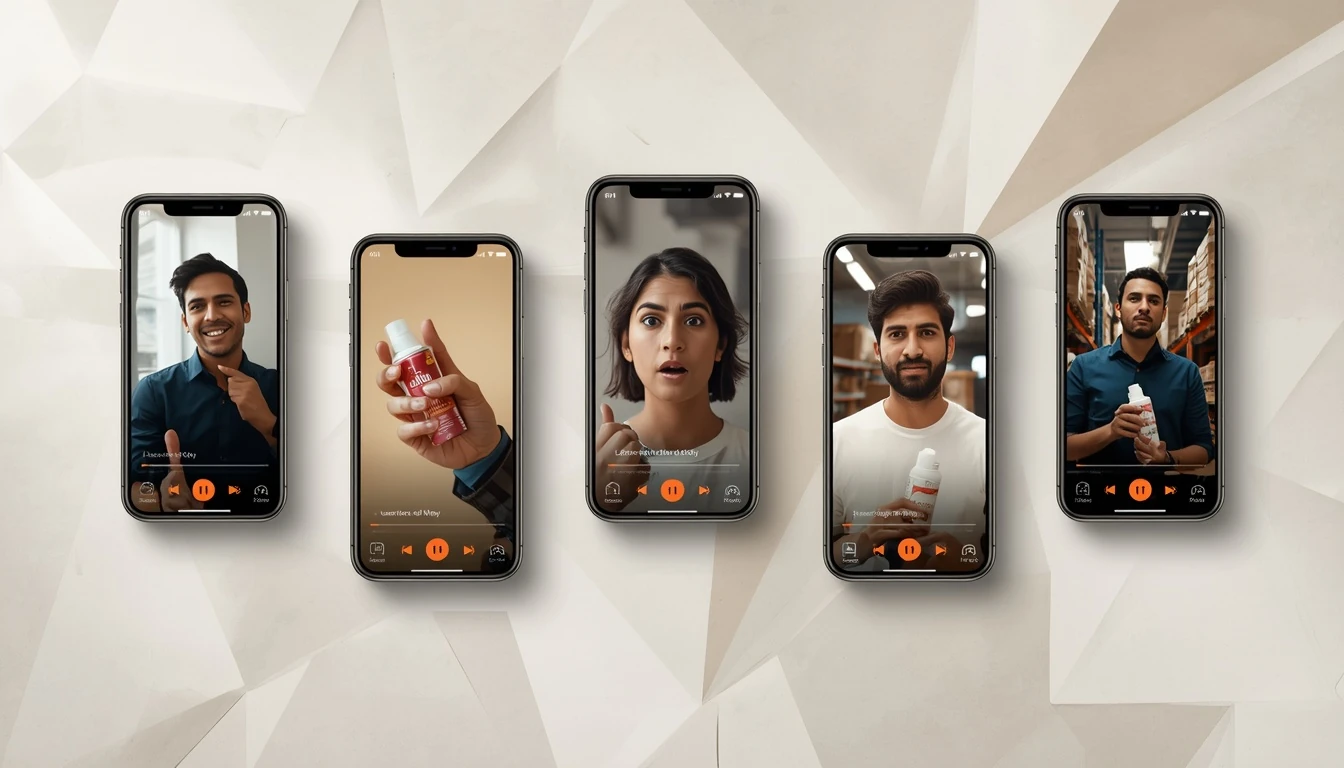
Format diversity matters more than ad volume. If you’re running 30 ads in one format, the algorithm sees 1 ad. Here are the 5 formats we keep on rotation across every account — with hook examples, CTAs, and how to brief each one.
 UGC
UGC⏤ Summarize with AI
Open this article in your favourite chatbot for a 3-bullet summary.
Most D2C brands don’t have a creative volume problem. They have a format diversity problem. They’re running 30 ads in one format and wondering why CPMs are climbing, why hold rate is dropping, why the algorithm has stopped finding cheap impressions. Here’s the rotation we run on every active account — five formats, each with its own hooks, briefing rules, and CTAs that actually convert.
Five ads in one format is still one doorway into the algorithm; five ads across five formats is five. Format diversity — not raw volume — is what keeps Meta's algorithm engaged and CPMs stable, because single-format brands plateau on CPM in 60–90 days.
Meta’s delivery system doesn’t just look at the ad — it looks at the shape of the ad. Frame composition, audio fingerprint, edit cadence, scene count. Two ads that look different to you can look identical to the algorithm if they share a format. Push 30 talking-head ads into one campaign and you’ve given the algorithm one creative, thirty times.
Format diversity isn’t a creative-team aesthetic preference. It’s how you keep CPMs from climbing past your unit economics. It’s how you survive the inevitable week when one format fatigues.
Single creator, vertical frame, talking to camera. The workhorse. ~40% of an account’s creatives should live here, but never 100%. It’s the format the algorithm recognises fastest, but also the one viewers are most numb to — which is why hook diversity is everything inside this format.
Why it works: trust signal. Familiar feed format. Easy to brief, fast to produce. Cheap to test new hooks against. The creator’s face does most of the work; the script just has to not ruin it.
Use “Shop Now” when the creator names a specific SKU. Use “Learn More” when the script is education- led and the landing page does the selling. Avoid “Sign Up” here — the format is built for direct purchase intent.
Show the product doing the thing. Brewing tea. Spraying perfume. Lacing the shoe. Stretching the band. No talking — or minimal voice over. Captions carry the script. The product carries the proof.
Why it works: reduces cognitive load. The viewer doesn’t have to imagine the product working. Especially powerful on mobile feeds where audio is off ~80% of the time. Demo also tends to win on click-through for first-time category buyers — the people who need to see it before they’ll click.
“Shop Now” almost always. Demo is a high-intent format — the viewer has just seen the proof and is closer to purchase than any other format on this list. Don’t soften the ask with “Discover” or “Explore”; you’ll waste the momentum.
Someone using the product in a real situation, with their reaction as the hook. Hard cut to face, then product. We covered this in depth in the hook frameworks piece — and we keep coming back to it because reaction format consistently delivers the lowest cost-per-thumbstop in our portfolio.
“Shop Now” for direct response, “Get Yours” for emotional categories (fragrance, fashion, wellness). Reaction format is doing the heavy emotional lifting — the CTA just needs to not break the spell.
Founder, no edits, talking about why this product exists. Not a polished “our story” video. A 30-second take that happens to be the founder, shot on a phone, in a kitchen or warehouse or studio. Imperfect lighting is a feature, not a bug.
Why it works: the lowest-CPM hook category in our data. Trust compounds because the audience knows this person isn’t a hired face. Founder-led almost never wins on CTR but consistently wins on downstream CVR — the people who click are pre-sold by the time they hit the PDP.
“Read Our Story” or “Learn More”outperform “Shop Now” here in our data. Founder-led builds the relationship; the landing page closes the sale. Forcing a hard purchase CTA on a trust ad collapses the funnel logic.
“The founder-led ad is the one your media buyer will tell you “doesn’t scale.” It does. It just scales the next ad you run.”
“I used to use ___, now I use ___.” The category education ad. Without this format, your top-of-funnel runs out of new buyers eventually — because every category has a ceiling of people already searching for you. Switch ads pull buyers from adjacent intent.
“Shop the Switch”, “Try Risk-Free”, or “Compare Yours”. The viewer is a switcher — they need a reason to act now. A money-back guarantee or a first-order discount lives well next to this format.
Once you have all five formats live, this is how we split spend within an account at steady state:
Most creator briefs fail because they describe the script, not the format. A creator who knows they’re shooting a “reaction” ad will frame the first beat differently from one who thinks they’re shooting a “demo.” Lead the brief with format, not copy.
Five ads, five hooks, all in talking-head format = one format. Five ads, one hook each, across five formats = five doorways into the algorithm. Pick the second.
The brands that compound on Meta in 2026 aren’t the ones with the most ads. They’re the ones with the most different ads. Format is how you measure that.
Minimum 3 of the 5 live at any time; 5 of 5 in rotation across a quarter. Single-format brands plateau on CPM in 60–90 days because Meta's algorithm reads the shape of the ad (frame, audio, edit cadence), not just the copy. Five ads in one format is one doorway into the algorithm — five formats is five.
Talking head UGC is the workhorse and where most accounts should start — fastest to brief, fastest to produce, easiest to test hooks inside. Once talking head is humming, layer in demo (high-intent format that wins on CTR for first-time category buyers) and founder-led (lowest CPM, highest downstream CVR). Reaction and comparison come third — they need more shoot discipline.
Run 70-20-10 at steady state: 70% on proven winners across at least 3 of the 5 formats, 20% on testing new hooks inside known formats, 10% on exploring new formats and creators. Within the 70%, don't go above 40% in any single format — talking head can absorb the most volume, but pushing it past 40% accelerates fatigue.
30–50 fresh creatives per month, split across the 5 formats and 8–12 hook variations. Below 20 a month, the algorithm sees you running the same ad on repeat and CPMs rise. The format mix matters as much as the count — 30 ads in talking head is worse for CPM stability than 20 ads across all 5 formats.
Talking head: "Shop Now" when the script names a specific SKU; "Learn More" when it's education-led. Demo: "Shop Now" almost always — it's a high-intent format and softer CTAs waste the momentum. Reaction: "Get Yours" for emotional categories (fragrance, wellness), "Shop Now" for direct response. Founder-led: "Read Our Story" or "Learn More" outperform "Shop Now" — founder ads build the relationship, the PDP closes the sale. Comparison: "Shop the Switch" or "Try Risk-Free" — pair with a money-back guarantee.
Tempting but quality drops. Reaction format needs a different headspace from founder-led; demo needs a different shot list from talking head. Split into 2 shoot days — talking head + demo + comparison on day one (similar script-led structure), reaction + founder-led on day two (situational and unscripted). Total cost is similar, output is materially better.
Formats are only half the creator question — the other half is UGC vs influencer (and when to use which). For the full D2C marketing playbook — media, creative, attribution, scaling — see our founder’s pillar guide.
⏤ Free audit
Read-only access to your Meta + Google Ads accounts. Full teardown of wasted spend, creative fatigue, and ROAS forecast. No obligation.
⏤ Working on something similar?
Read-only access to your Meta + Google Ads accounts. Full teardown of wasted spend, creative fatigue, and ROAS forecast. No obligation. Or jump straight to our UGC ads page.
We use cookies for analytics and ads. See our Privacy Policy.