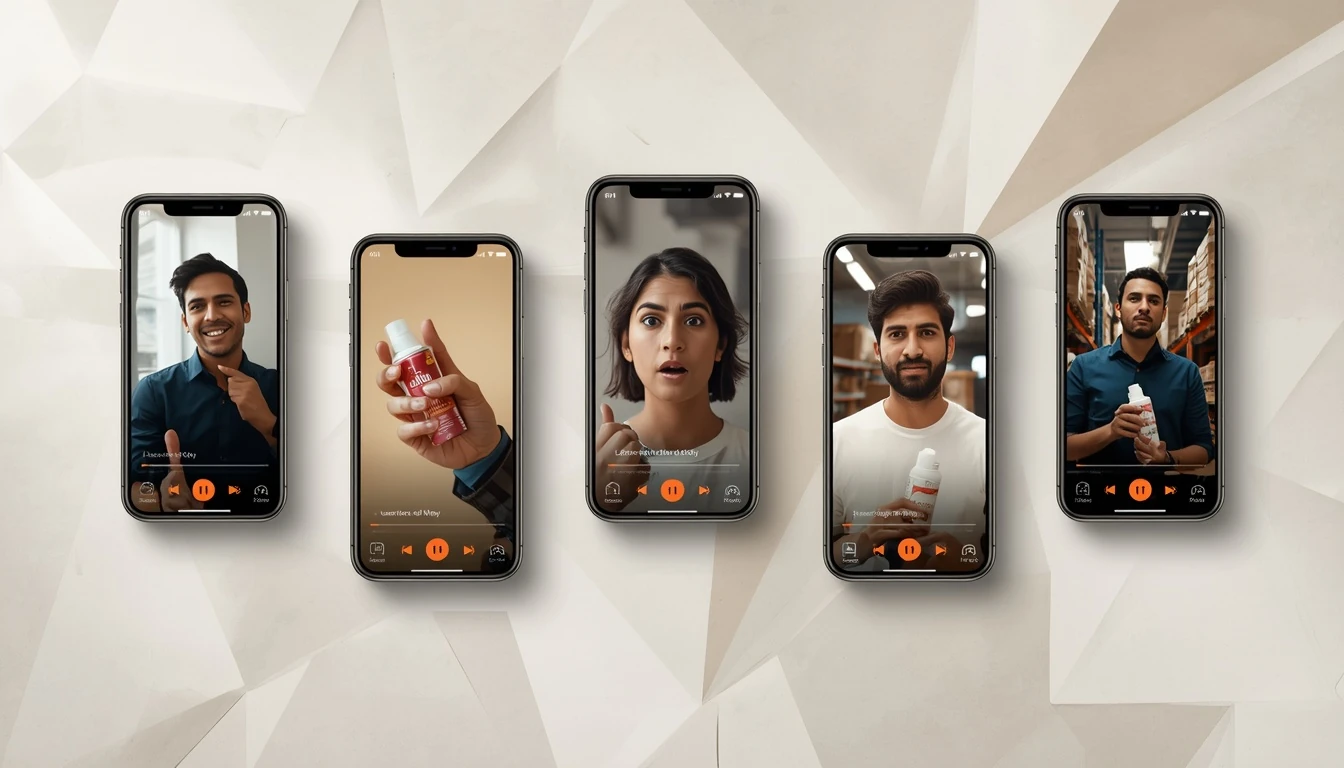
 UGC
UGCUGC · Apr 2026
Most Indian creative agencies outsource shoots to production houses and rely on freelance editors. We don't — and that changes the economics for D2C brands. A look inside India's fully in-house D2C creative ad studio model, plus 9 other agencies worth knowing.
 UGC
UGC⏤ Summarize with AI
Open this article in your favourite chatbot for a 3-bullet summary.
India's creative ad agency economics typically work like this: brand pays agency, agency outsources the shoot to a production house, agency hires a freelance editor per project, agency takes margin across the chain. The end-product is fine. The cost is high, the velocity is slow, the creative DNA gets diluted in every handoff. We operate a different model — fully in-house — and it changes what's possible for a D2C brand shipping 30–50 creatives a month. Here's how it works, plus 9 other creative ad agencies in India worth knowing if our model isn't the right fit for you.
India's creative ad agency market has bifurcated. Legacy networks (Ogilvy, Leo Burnett, BBH) still own FMCG, auto, and BFSI brand budgets but have lost most D2C work — their cost structures and turnaround can't match the weekly-iteration creative cycles D2C needs. Wieden+Kennedy India's 2024 wind-down confirmed traditional network creative is shrinking in D2C.
India's creative ad agency landscape has bifurcated. At the top, the legacy networks — Ogilvy, Leo Burnett, BBH, L&K Saatchi — still own the FMCG, auto, and BFSI brand-build budgets. But they've lost most D2C work; their cost structures and turnaround speeds don't align with the weekly-iteration creative cycles that D2C brands need to keep CPMs stable. Wieden+Kennedy India formally wound down operations in late 2024, a watershed confirmation that traditional network creative is shrinking in India.
The middle has been captured by independent “next-gen” agencies founded between 2014–2022 — Talented, Animal, The Womb, Famous Innovations, Tilt — most of which were started by senior network refugees and explicitly position around “we work for the brand, not the brief.” This is where most ₹10L+/month D2C accounts now sit when they want award-grade creative.
The fastest-growing tier is the creator-economy-adjacent creative shop: Monk Entertainment, Chtrbox, and a tail of smaller UGC-first studios. They've absorbed the “performance creative” budget that used to flow to in-house brand teams.
And then there's a fourth category that almost nobody talks about: fully in-house creative studios that handle every stage of production from shoot to edit to strategy without outsourcing. It's where we sit. It's structurally different from the creative-direction-led agencies above, and it changes the economics for D2C brands in ways that matter. Here's what “fully in-house” actually means in 2026, and what it changes for a D2C brand shipping creative at volume.
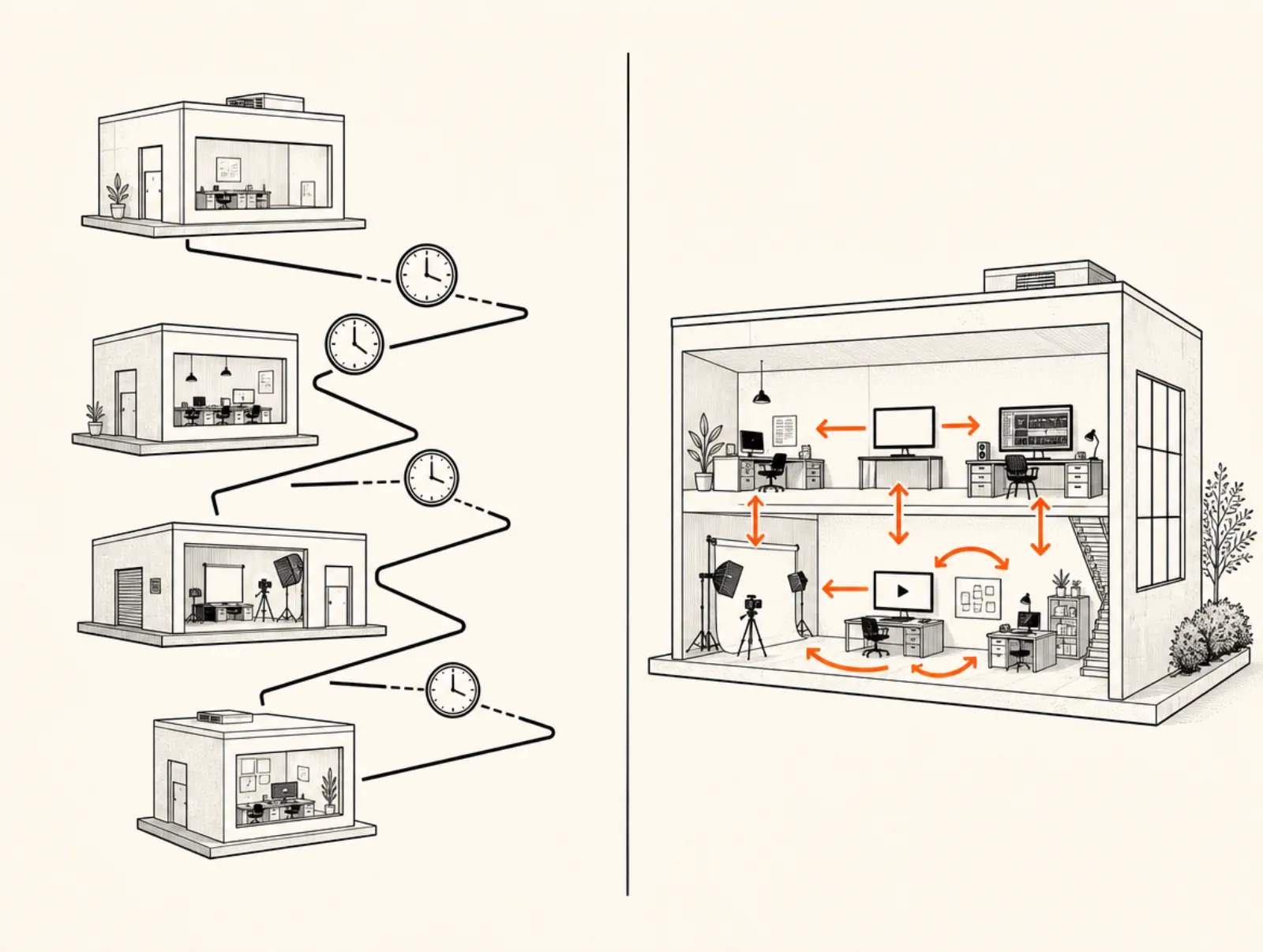
We started Iblix in 2020 as a creative-and-performance studio for D2C lifestyle brands in India. Six years later, we're still here, running a 24-person team out of a single studio in Kolkata. Every function — shoots, edit, strategy, copy, design, motion — sits on payroll. We don't manage freelancer pools. We don't subcontract production to external houses. The whole pipeline lives under one roof. Here's what that translates to in numbers.
120+
Active D2C brands
₹38 Cr+
Ad spend managed
3.4×
Blended ROAS
2,000+
Creatives shipped
⏤ Iblix portfolio · 12 months ending May 2026
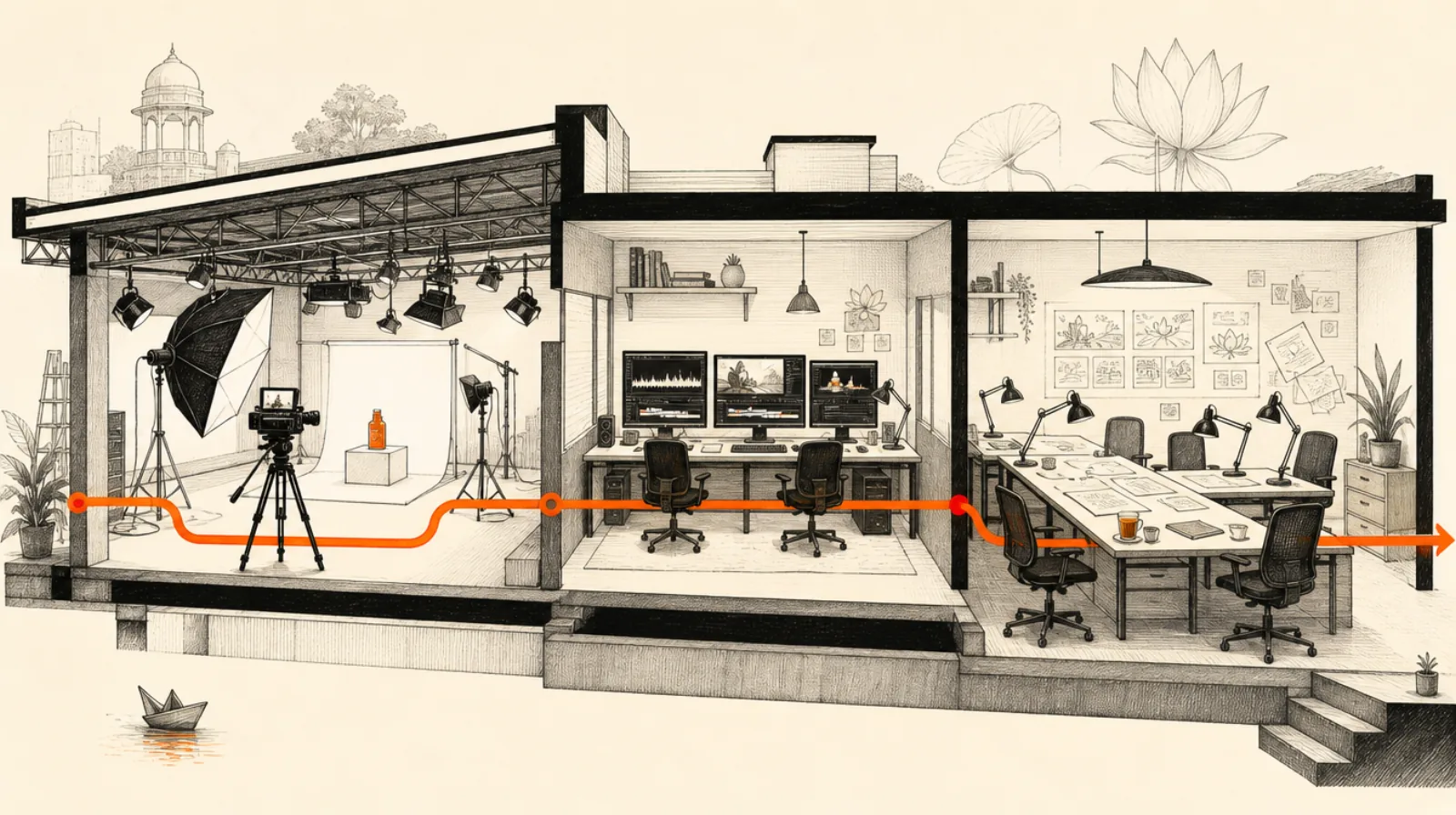
A single physical space in Kolkata houses our shoot floor, edit bays, strategy room, and the design / motion stations. The shoot floor handles UGC, founder content, product demos, skits, and micro-drama formats — backdrops, lighting kits, prop library, cyc wall when needed. The shoots don't book studio time on someone else's calendar; they happen on the same floor as the editors who'll cut them tomorrow.
The edit bays sit next to the shoot floor by design. When a creator wraps a shoot, the lead editor walks across, queues the first cut, and the strategist who briefed the shoot sees a rough within 24 hours. No handoff emails. No Dropbox links. No “we'll get back to you next week” from a freelance editor working on three other accounts.
Creators on camera (UGC, founder, reaction formats), shoot crew (DOP, lighting, sound, production-assistant rotation), edit team (lead + assistant editors across long-form, short-form, and motion), strategists (account leads who own the brief and the performance loop), creative directors (concept, hook framework, narrative), copy + design (statics, scripts, motion captioning), and media buyers (Meta, Google, marketplace). Every one of these is a full-time Iblix employee. There is no “managed freelancer pool.” There is no overseas back-office.
The same studio + team + brief framework produces every format we ship — which is the structural reason we can run 9 of them in parallel without quality drop:
UGC
user-generated, mobile-shot, native to feed
Founder
founder-on-camera, trust-led, demo-style
Skits
scripted situational with characters
Micro-dramas
30–60s narrative arcs
Product demos
in-use, sensory, problem-solution
Reaction
reactor-frame, social-proof flavoured
Editorial film
brand-grade short film
Static
single-frame creative for scroll-stop
Motion graphics
data, listicle, animated reveals
Across the 120+ brands we currently manage, the median brand ships between 30 and 50 fresh creatives per month — split across 4–6 of the 9 formats, with 8–12 hook variations per concept. We shipped 2,000+ creatives in the last 12 months across the portfolio. The volume isn't an accident — it's what the algorithm rewards. Below 20 fresh creatives per month, Meta's optimisation engine sees you running the same ad on repeat and CPMs rise. This is the central thesis behind our breakdown of why D2C CPMs keep rising — creative volume is the leading indicator of ad-account health.
Industry standard with the outsourced model is 4–6 weeks from brief to first deliverable batch. Brand sends brief → agency develops concept → production house quotes shoot → scheduling delay → shoot day → footage handover → freelance editor queue → first cut → revision round 1 → revision round 2 → delivery. Each handoff is 3–7 days of lost time. We've measured it for years.
Our in-house pipeline: 15 days from brief to first cut of a 30-asset batch. Same studio, same editors, same strategists across every iteration. The TAT compression isn't a process improvement — it's a structural consequence of not having handoffs between four organisations.
24 named D2C brands in active management, plus the long tail of the 120+ brand portfolio. A subset of the named brands:





29 named brands shown · 62 total in active management
Mix across categories: athletic + fitness (Boldfit), footwear (Fuel Shoes, Hoofers), fashion and accessories (Reistor, Estelle Luxe), beverages and wellness (Blue Tea, Wiselife), beauty and personal care, kitchenware (Shri & Sam, Minute to Clean), kids (Lilbud), pharma (Triq Pharma), and SaaS (Mint Investing, Gullak, TrulyMadly). The portfolio spans pre-seed to ₹100 Cr+ ARR.
The biggest change an in-house model brings is velocity: 15 days from brief to first cut means testing ~24 creative concepts a year instead of 6. A brand that runs more shots-on-goal learns its audience's creative preferences faster — and that compounds over 12 months, alongside lower cost (no margin on outsourced shoots) and tighter consistency.
15 days from brief to first cut means you can test a creative thesis in two weeks instead of two months. That's not a marginal improvement — it's the difference between testing 24 concepts a year and testing 6. A D2C brand that runs more shots-on-goal learns faster. The compounding effect over 12 months is the difference between knowing your audience's creative preferences cold and still guessing.
The outsourced model has margin stacking at every hop. Brand pays agency. Agency takes its margin. Agency pays production house. Production house takes its margin. Production house pays freelance editor. Editor takes their hourly. By the time a ₹50,000 brief becomes a delivered asset, ₹15,000–₹25,000 of it has gone to coordination overhead and stacked margins. In an in-house model, the same brief funds the actual production + editor + strategist time without the intermediate margins. The per-asset cost is meaningfully lower for the same quality.
The strategist who briefed the shoot, the creator who shot it, the editor who cut it, and the media buyer who'll run it all sit in the same studio. The hook framework that worked for one creator this week informs the next creator's brief next week. Insights from a Meta ad set's first-day data feed back into the next batch in 48 hours. In the outsourced model, the editor cutting your ad has no idea what hook performed on Meta last week — they're working from a brief, in isolation, on three other accounts.
You own every asset. You own the rights. You own the production files. You own the strategy framework. There's no situation where leaving the agency means losing your edit project files, your creator relationships, or your performance data. The whole operation is inside one team, on one server, contractually yours.
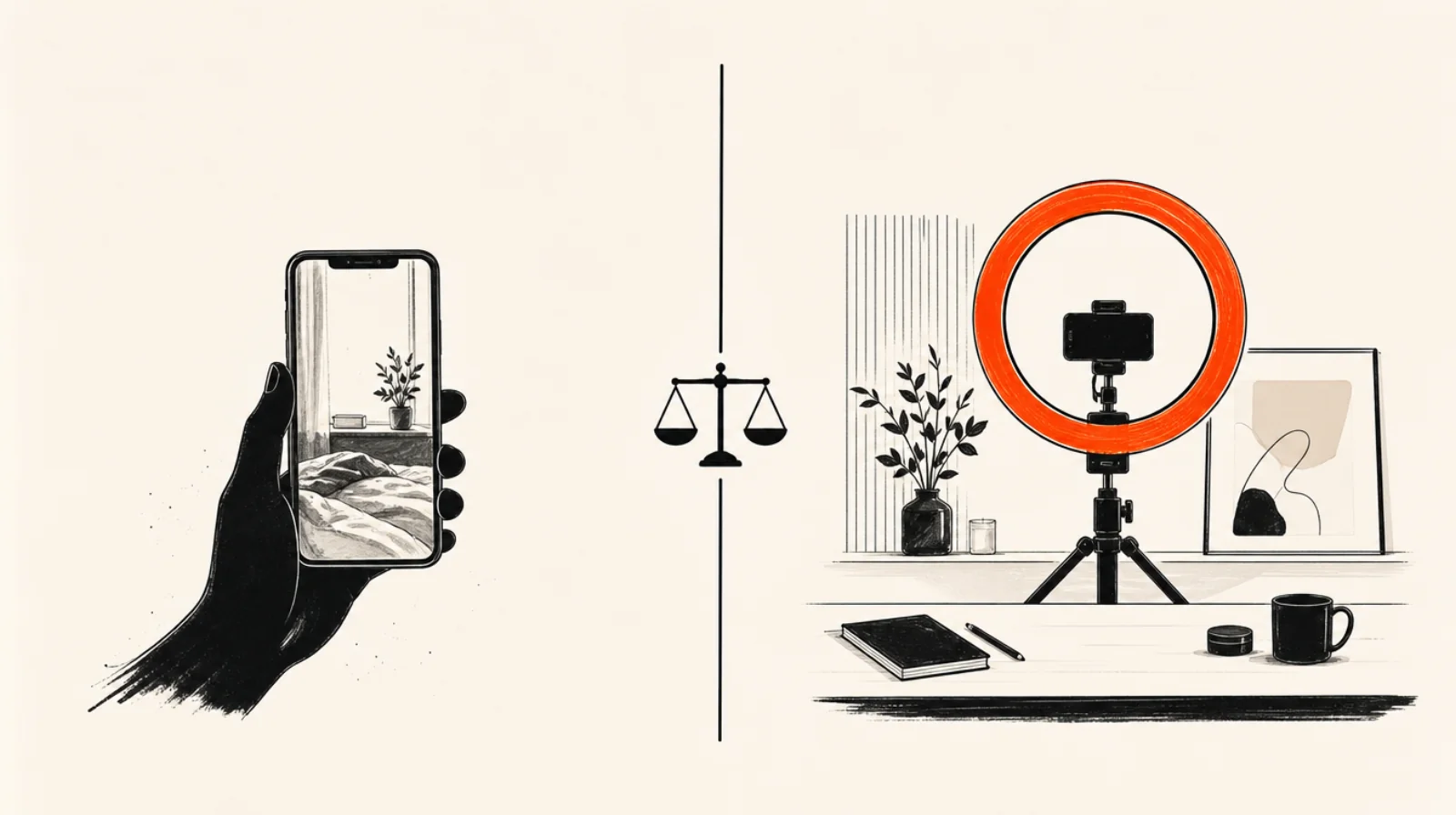
The in-house model isn't the right fit if you need fewer than ~10 creatives a month. Below that, a single full-time UGC creator (₹40k–₹70k/month) plus a freelance editor is better-matched economics than a full studio + strategist + media stack built for the 10–50/month cadence.
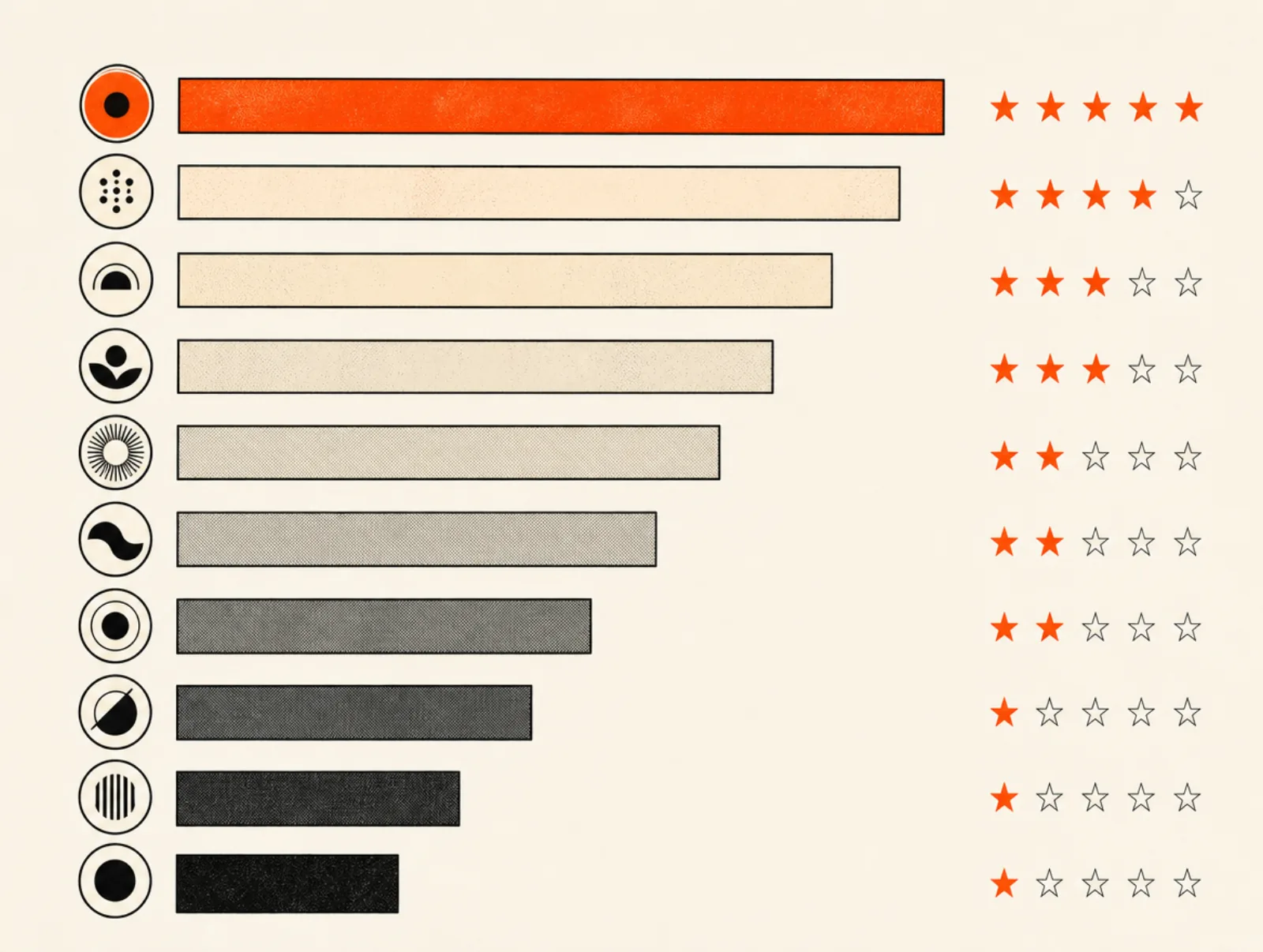
If the in-house studio model isn't the right shape for your brand, the nine agencies below cover the rest of the legitimate Indian creative landscape for D2C work. Not a ranking — these are grouped loosely by similarity to our model (in-house peers first, creative-direction shops next, enterprise creative last). Pick the one whose model matches your situation.
Creator-anchored in-house
Best for · Consumer-tech, beauty, F&B at ₹10L+/mo wanting creator-led creative at scale
Strategy-through-production (partial in-house)
Best for · Series A+ D2C (₹15L–₹50L/mo) in beauty, wellness, lifestyle wanting AOR-grade work
Hybrid — owned production + creator-anchored shoots
Best for · ₹15L+/mo brands wanting always-on influencer-creative volume
Boutique in-house (design + film + code)
Best for · Design-conscious D2C at ₹10L+/mo in beauty, wellness, premium lifestyle, fintech
Creator + brand-creative hybrid
Best for · ₹10L+/mo D2C wanting creator-culture-fluent campaigns without legacy network overhead
Creative-direction-led, outsourced production
Best for · ₹20L+/mo brands in brand-build phase scaling to category leadership
Creative-led, external film production partners
Best for · Mid-to-large D2C ready for big-budget brand campaigns (₹50L+ campaign budgets)
Strategy + creative, outsourced production
Best for · Brand-build-first D2C at ₹20L+/mo (not performance-creative-first)
Enterprise creative, network production
Best for · Established D2C at ₹50L+/mo media spend wanting global craft standards
| Agency | Model | Best For |
|---|---|---|
| Creator-anchored in-house | Consumer-tech, beauty, F&B at ₹10L+/mo wanting creator-led creative at scale | |
| Strategy-through-production (partial in-house) | Series A+ D2C (₹15L–₹50L/mo) in beauty, wellness, lifestyle wanting AOR-grade work | |
| Hybrid — owned production + creator-anchored shoots | ₹15L+/mo brands wanting always-on influencer-creative volume | |
| Boutique in-house (design + film + code) | Design-conscious D2C at ₹10L+/mo in beauty, wellness, premium lifestyle, fintech | |
| Creator + brand-creative hybrid | ₹10L+/mo D2C wanting creator-culture-fluent campaigns without legacy network overhead | |
| Creative-direction-led, outsourced production | ₹20L+/mo brands in brand-build phase scaling to category leadership | |
| Creative-led, external film production partners | Mid-to-large D2C ready for big-budget brand campaigns (₹50L+ campaign budgets) | |
| Strategy + creative, outsourced production | Brand-build-first D2C at ₹20L+/mo (not performance-creative-first) | |
| Enterprise creative, network production | Established D2C at ₹50L+/mo media spend wanting global craft standards |
Founded: 2018 · Team: ~141 · HQ: Mumbai · Founders: Ranveer Allahbadia (BeerBiceps), Viraj Sheth
India's largest creator-and-creative network by headcount. Runs monke.studios as a stated in-house production unit — among the closest peers to Iblix's owned-studio model, with the important caveat that their in-house is creator-talent-anchored rather than purely production-infrastructure-anchored. Real client roster: Nykaa, Tinder, Puma, Skechers, Unacademy, Zomato, Spotify. Best fit for consumer-tech, beauty, and F&B brands at ₹10L+/month spend wanting creator-anchored creative at scale.
Founded: 2018 · Team: ~75–100 · HQ: Mumbai · Leadership: Shriram Iyer (CCO, ex-Lowe Lintas / Ogilvy lineage), Srikanth Sarathy, Rajiv Chatterjee
Among the strongest D2C-specific agency-on-record holders in India — current AORs include The Pink Foundry (skincare D2C), 82°E (Deepika Padukone's beauty D2C), and Ather Energy. Stated “strategy through production” model with partial in-house production capacity. Part of Quotient Ventures. Best fit for Series A+ D2C brands at ₹15L–₹50L/month spend in beauty / wellness / lifestyle.
Founded: 2016 · Team: ~100–150 · HQ: Mumbai + Dubai · Founder: Pranay Swarup
First influencer-marketing agency in India to list on BSE SME (2025). Runs ChtrStudios as a content production arm alongside the influencer platform. Client roster heavy on multinationals (P&G, HP, Amazon, CRED, Whisper, Vivo) with a growing D2C book. Hybrid model — owned production capacity but creator-anchored shoots dominate. Best fit for ₹15L+/month brands wanting always-on influencer-creative volume.
Founded: 2014 · Team: ~30 · HQ: New Delhi (+ NY, Toronto) · Founders: Kunel Gaur, Sharon Borgoyary (ex-JWT)
Design-first boutique with genuine in-house filmmaking capacity — “copywriters, animators, filmmakers, coders” per their own team description. True in-house but at boutique scale, not scaled-studio scale. Known work: CRED Instagram cultural almanac, Setu (D2C supplements), Origem (lab-grown diamonds), One Degree. Best fit for design-conscious D2C brands at ₹10L+/month — beauty, wellness, premium lifestyle, fintech.
Founded: 2023 · HQ: Bengaluru · Founders: Tanmay Bhat, Devaiah Bopanna (ex-AIB)
Content studio that crossed from creator-economy into brand creative — won Independent Agency of the Year 2025 at Good Ads Matter Awards in under two years. Known work: CRED, Lenskart, Fireboltt. Hybrid creator + brand-creative model with strong cultural fluency. Best fit for D2C brands at ₹10L+/month wanting creator-culture-fluent campaigns without the legacy network overhead.
Founded: 2022 · Team: ~80–100 · HQ: Bengaluru (remote-first) · Founders: Gautam Reghunath, PG Aditiya (both ex-Dentsu Webchutney CEO/CCO)
Top-tier brand-build creative shop — won 3 Cannes Lions in their first year, 6 Campaign India Agency of the Year awards 2023. Clean foil to the in-house production model: Talented is creative-direction-led with shoots outsourced to production partners (e.g., Nishikant Palande credited on the Swiggy “Why Is This A Swiggy Ad” campaign). Known clients: Swiggy, MakeMyTrip, XYXX Crew, HomeLane, Britannia, Tanishq, Google, Flipkart. Best fit for ₹20L+/month brands in brand-build phase (post-PMF, scaling to category leadership).
Founded: 2014 · Team: ~100+ · HQ: Mumbai · Founder: Raj Kamble (ex-BBH India MD/CCO)
10-year award streak (Campaign South Asia Agency of the Year 2015–2024). Big-idea brand creative across Adidas, Nestle, Mahindra, L'Oréal Matrix, Saudi Tourism, Asus. Creative-led model with external production partners for film. Lighter D2C book than the agencies above; stronger for multinational brand-build work. Caveat: Storyboard18 reported in 2025 that Raj Kamble was exploring a sale of the agency — verify the agency's independence status at engagement time. Best fit for mid-to-large D2C brands ready for big-budget brand campaigns (₹50L+ campaign budgets).
Founded: 2015 · Team: ~80–85 · HQ: Mumbai · Founders: Kawal Shoor, Navin Talreja (both ex-Ogilvy); CEO Anurag Gupta
WARC 100 2025 ranked #1 Independent agency in Asia-Pacific, #4 globally. Known for the “never pitches” model — only works with clients who pre-believe in the agency. Strategy-and-creative-led, outsourced production. Less D2C-heavy than the agencies above; roster includes Mahindra Thar, Piramal Finance, Britannia, Fogg, Truecaller, Saregama Carvaan. Best fit for brand-build-first D2C (not performance-creative-first) at ₹20L+/month.
Founded: 2008 (India) · HQ: Mumbai · Leadership: Russell Barrett, Dheeraj Sinha (Publicis-owned since the network acquisition)
The enterprise-creative option on this list. Premium creative craft with global BBH network resources. D2C-relevant work includes CaratLane (D2C jewelry unicorn) and Upgrad (edtech D2C), alongside enterprise brands Garnier, Red Bull, HDFC Ergo. Network-owned, network-priced. Best fit for established D2C brands at ₹50L+/month media spend who want global craft standards.
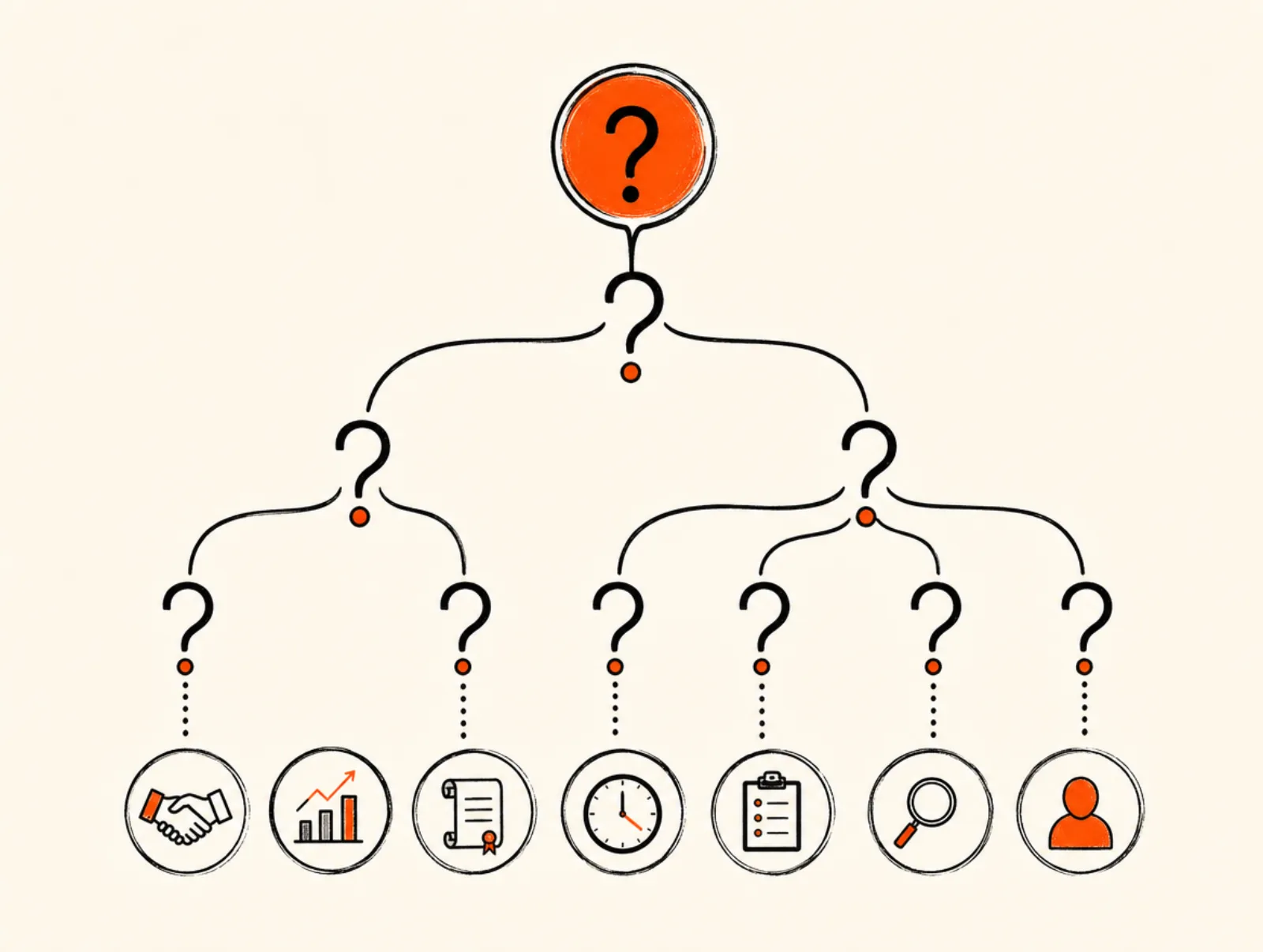
Ask seven questions before hiring — the first two matter most: do you own a physical production studio or outsource shoots, and are your editors full-time or freelance? Then: 3 D2C samples in my category, monthly cadence (30–50), brief-to-cut turnaround, how creative performance is measured, and the pricing model.
Run this framework on every pitch you take. The first two questions matter most — they tell you whether the agency actually has the production infrastructure they're pricing for, or whether you're paying margin on outsourced production.
Ask to see it. Ask for the studio manager's LinkedIn. Studios cost money to maintain — agencies that claim in-house but outsource end up with margin-stacked invoices.
Ask for the editor count + their LinkedIn profiles. A freelance pool means your edit is always queued behind two other accounts — and the “same editor” who cut your last campaign may not be available for the next one.
Generic case studies aren't enough. Your category specifically. Real ROAS or brand-lift numbers. Time windows. If they can't produce 3 in 30 minutes, they're not a category specialist.
Below 20 fresh creatives a month, Meta's algorithm sees you running the same ad on repeat and CPMs climb. A serious creative partner for a D2C brand at ₹2L+/month should produce 30–50 creatives per month across 4–6 formats. Ask for portfolio examples that demonstrate this volume.
Industry standard with outsourced production is 4–6 weeks. Fully in-house studios should deliver 10–20 days. If an agency quotes “6–8 weeks” for first cut, they're outsourcing — even if they don't say so directly.
Platform-reported CTR / hook rate / thumbstop is one input; the only metric that matters is whether the creative drove revenue. A serious creative partner cares about your blended-MER and will iterate creative based on Shopify-attributed performance, not just Meta's in-platform numbers.
All three are defensible. What's not defensible is opacity. A good agency will tell you which model and why — including which model is wrong for your stage. Be wary of pricing that's “customised” without a clear structure or that bundles creative + media management in a way that obscures the per-component cost.
An in-house creative agency owns its production infrastructure end-to-end: a physical shoot studio, full-time editors on payroll, in-house strategists and copywriters. A regular creative agency typically operates with a smaller core team and outsources shoots to production houses, hires freelance editors per project, and assembles a virtual team per client. The in-house model trades flexibility for speed, cost-control, and creative consistency. Most Indian agencies operate the hybrid / outsourced model; fully in-house D2C creative studios are rare.
Three pricing models are common: per-asset (₹5,000–₹50,000 for UGC, ₹50,000–₹2,00,000 for broadcast-quality, ₹2,00,000+ for large-format film), monthly retainer (₹50,000–₹3,00,000 for mid-market D2C; ₹3L–₹15L+ for established brands), or % of media spend (10–25% — common when the same agency handles media buying). Most D2C brands at ₹2L+/month ad spend land in the ₹75,000–₹2,50,000/month total cost range for creative work.
A creative agency produces ad assets — UGC, founder videos, statics, motion, brand films. A performance marketing agency buys media — runs Meta Ads, Google Ads, marketplace ads, optimises bidding, manages audiences. Some agencies do both (Iblix runs both creative + media), others specialise. For D2C, the line is blurring because performance creative is the leading indicator of CPM stability — most serious performance agencies in 2026 also produce creative. See our separate ranking of Indian performance marketing agencies for the media-buying side of the same landscape.
Below ₹5L/month ad spend, a creative agency wins on cost — building a 4-person in-house creative team (creative lead + producer + editor + UGC creator) costs ₹15L+/month in salary alone before equipment. ₹5L–₹15L/month ad spend is the sweet spot for agencies. Above ₹15L/month, the math starts to favour hybrid: hire an in-house creative director + freelance / agency for production overflow. Above ₹50L/month, fully in-house with agency-of-record for spike moments becomes economical. Most successful D2C unicorns (Mamaearth, boAt, Mokobara, Sleepy Owl) built in-house creative teams around the ₹50L+/month mark.
For brands spending ₹2L–₹20L per month on Meta Ads, the realistic answer is 30–50 fresh creatives per month — split across 4–6 formats (UGC, founder, skits, demos, static, motion) and 8–12 hook variations. Below 20 creatives a month, the algorithm sees you running the same ad on repeat and CPMs rise. This is the central thesis behind our breakdown of why D2C CPMs keep rising — creative volume is the leading indicator of ad-account health.
In 2026, the proven D2C format stack is: UGC (60% of volume — native-feeling, mobile-first, scales cheaply), founder ads (10–15% — trust-led, hard to replicate), product demos (15% — purchase-intent), with the remainder split across static, motion, and editorial. Pure UGC-only brands plateau on CPM in 60–90 days; the format diversity is what keeps the algorithm interested. We ship 9 formats from one in-house pipeline — UGC, founder, skits, micro-dramas, demos, reaction, editorial, static, motion.
Industry standard with outsourced production: 4–6 weeks from brief to first deliverable batch (brief → production house quote → shoot scheduling → freelance editor → revisions → delivery). Our in-house pipeline: 15 days from brief to first cut of a 30-asset batch. The difference is structural — we don't lose 1–2 weeks per asset to handoffs between brand, agency, production house, and freelance editor. Same studio, same editors, same strategists across every iteration.
If you're a D2C founder evaluating creative agencies tomorrow:
Need under 10 creatives a month: Skip agency engagement entirely. Hire one full-time UGC creator at ₹40,000–₹70,000/month plus a freelance editor at ₹30,000–₹50,000/month and ship 5–10 creatives a month yourself. The economics don't support an agency until you cross the 10-creatives-per-month threshold.
10–50 creatives a month (typically ₹2L–₹20L/month ad spend): This is the in-house studio sweet spot. Brands shipping across UGC + founder + demos + statics + motion benefit most from owned production infrastructure — same studio, same editors, same strategists across every iteration. We're built for this stage — talk to us, or look at Monk, Tilt, or Animal for in-house peer options.
₹20L+/month and brand-build-led: Talented, Famous Innovations, The Womb sit in this tier — strategy + craft + festival-grade film. Different shape from performance creative; complementary, not competitive.
Enterprise D2C above ₹50L/month: BBH India is the global-craft option; Monk Entertainment is the creator-anchored option at scale; Chtrbox is the always-on influencer-creative volume option.
Whatever you pick, run the 7-question framework on the pitch. Production model, editor structure, named D2C clients, cadence, TAT, attribution rigour, pricing transparency. Agencies that can't answer all seven crisply usually aren't the right fit for D2C performance creative work.
⏤ Free audit
Read-only access to your Meta + Google Ads accounts. Full teardown of wasted spend, creative fatigue, and ROAS forecast. No obligation.
⏤ Working on something similar?
Read-only access to your Meta + Google Ads accounts. Full teardown of wasted spend, creative fatigue, and ROAS forecast. No obligation. Or jump straight to our UGC ads page.
We use cookies for analytics and ads. See our Privacy Policy.