Performance · Jun 2026
← Journal
ShopifyMay 2026 · 18 min read
Shopify SEO for D2C Brands in India: The Complete 2026 Playbook
Shopify SEO is the most under-invested D2C channel in India in 2026 — and the highest-leverage one for brands at ₹2L+/month ad spend. The complete playbook: technical setup, the 5C framework, content stack, agency vs in-house economics, and the mistakes that quietly kill rankings.
 SHOPIFY
⏤ Summarize with AI
Open this article in your favourite chatbot for a 3-bullet summary.
Shopify SEO is the most under-invested channel in Indian D2C. Most brands spend under 2% of their marketing budget on organic search — while mature brands routinely see organic carry 40–60% of revenue. The reason for the gap is simple: paid media shows results next week, SEO shows results next quarter, and most agencies make more money running ads. This is the complete playbook we use across the 47+ Shopify stores we've built — technical foundation, the 5C framework, content stack, and the mistakes that quietly kill rankings.
Why Shopify SEO is under-invested in India (and the upside)
Shopify SEO is under-invested in India because agencies earn more running ads, founders underestimate it as "just blog posts," and the payoff lands in quarters, not weeks. The upside: well-executed SEO returns roughly 5–12× over 18 months and doesn't reset to zero when you stop spending — making it the cheapest acquisition channel for brands willing to wait.
Three structural reasons the channel stays neglected:
- Agencies make more on ads. A performance agency charging 10–25% of ad spend earns more from a brand that pours budget into Meta than from one that invests in organic. SEO is a smaller, slower-billing line item. So agencies steer brands toward paid.
- Founders underestimate it. Most D2C founders think SEO equals "writing blog posts." They don't see the technical foundation, the collection-page architecture, or the backlink work — so they under-resource it and then conclude "SEO doesn't work for us."
- The payoff is delayed. Paid media shows ROAS in days. SEO compounds over quarters. Founders optimising for this month's numbers always pick paid.
Here's the upside that makes it worth the patience: every ₹1 of well-executed Shopify SEO investment returns 5–12× over 18 months — versus paid media's 3–4× per cycle that resets to zero the moment you stop spending. SEO traffic doesn't switch off when the budget does. For a brand willing to invest ahead of the payoff, it's the cheapest customer-acquisition channel that exists. And because so few Indian D2C brands do it well, the competition for organic rankings in most D2C categories is soft.
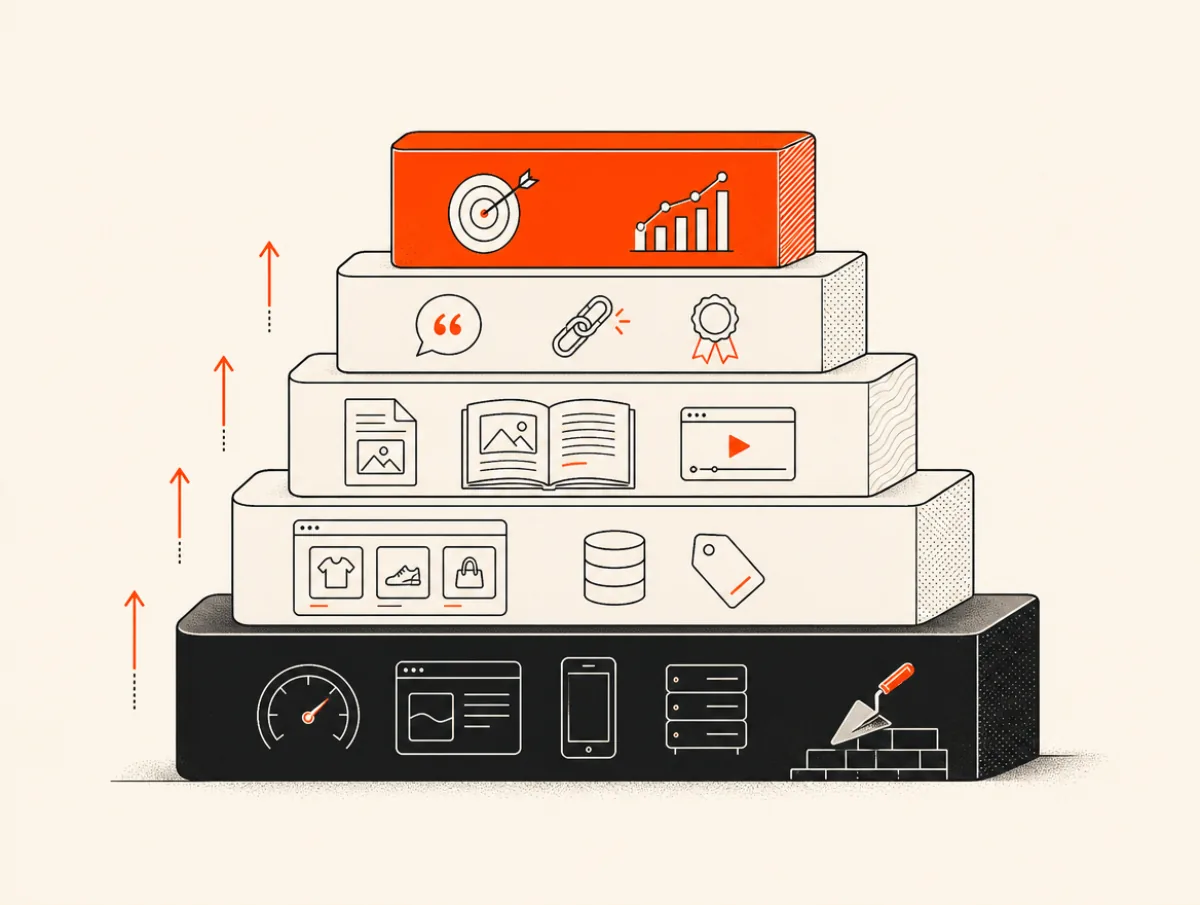
The 5C Shopify SEO framework
Shopify SEO fits into five layers — Core Web Vitals, Catalog architecture, Content velocity, Citations (backlinks), and Conversion attribution. Work them in order: there's no point writing content if the site can't be crawled or the collections aren't structured.
Everything in Shopify SEO fits into five layers. Get them in order — there's no point writing content (C3) if your site can't be crawled (C1) or your collections aren't structured (C2).
C1
Core Web Vitals
LCP < 2.5s, CLS < 0.1, INP < 200ms — the technical performance floor Google ranks on
C2
Catalog architecture
collection + product page structure, internal linking, canonical handling for variants
C3
Content velocity
blog cadence + buyer-journey content matched to search intent
C4
Citations
backlinks + brand mentions — the D2C-specific link strategies that actually work
C5
Conversion attribution
GA4 + Search Console + Shopify, measured on blended-MER not last-click
Layer 1 — Technical foundation (Core Web Vitals)
Google ranks on speed. The 2026 targets you must hit: LCP under 2.5 seconds, CLS under 0.1, INP under 200ms. On Shopify, the levers:
- Theme choice. Shopify's Dawn-family themes (Dawn, Sense, Craft, Refresh) pass Core Web Vitals out of the box on Online Store 2.0. Heavy third-party themes with bundled JavaScript routinely fail LCP.
- App discipline. Every app that injects a script adds render-blocking weight. Audit your installed apps — most brands run 15–25 and need 6–8. Each removed app is a speed win.
- Image optimisation. WebP, lazy loading, correctly-sized images. Shopify serves WebP automatically if you upload high-quality source files, but oversized hero images are the #1 LCP killer.
- Schema markup. Product schema (price, rating, availability), Organization, BreadcrumbList, FAQPage. Without Product schema you lose rich-result eligibility — the star ratings and price that make your listing stand out in search.
- Redirects + canonicals. Every deleted product → 301 to its category, never a 404. Verify canonical tags resolve variant URLs to the main product URL.
- Robots + sitemap. Block /cart, /checkout, /account, /orders. Leave product + collection pages open. Submit /sitemap.xml in Search Console.
Layer 2 — Catalog architecture (on-page)
This is where most brands leave the biggest wins on the table.
Product pages
Title under 60 characters, meta description under 155, H1 = product name, H2s for benefits / specs / reviews. Write original product descriptions — manufacturer copy duplicated across the web ranks for nobody. Add review content (it's free, keyword-rich, and updates the page regularly, which Google rewards).
Collection pages — your highest-value opportunity
Collection pages (/collections/...) target category-level search intent ("running shoes for women", "cold-pressed coffee") which has far higher volume than individual product queries. Yet 90% of D2C brands leave them as bare product grids with no copy. Add: an H1 matching the category, 150–300 words of intro copy targeting the category keyword, internal links to the top products + related collections + 1–2 relevant blog posts. This single fix moves rankings more than any amount of blogging.
Internal linking
Every collection links to its top 3 products + related collections. Every blog post links to the relevant collection + 2 related posts. Every product links back to its collection. This distributes ranking authority across the catalog and helps Google understand your topical structure.
Layer 3 — Content velocity
Content is the third layer, not the first — but it's where the sustained traffic comes from. The buyer-journey structure:
- Awareness — "how to", "what is", "why does" content. Pulls people who don't know your brand yet.
- Consideration — "best [category] for [audience]", "[product] vs [alternative]", "[category] guide". Captures comparison-stage shoppers.
- Decision — "[your brand] review", "[product] pricing", "is [product] worth it". Catches buyers about to purchase.
Cadence: 4–6 posts per month minimum to build topical authority. The "best of" listicle format is especially powerful — it captures comparison-intent searches and earns backlinks (the same reason this very article exists). And original data — your own benchmarks, survey results, category insights — is the single most link-worthy content type. AI engines (ChatGPT search, Perplexity) cite sources of data over sources of opinion.
Layer 4 — Citations (backlinks)
Backlinks remain a top-3 ranking factor. The D2C-specific tactics that actually work in India:
- Founder PR. Get the founder quoted in Inc42, YourStory, Storyboard18, ET BrandEquity. Each editorial mention is a high-authority backlink.
- Original research / data reports. Publish a category data report. Journalists cite data; that citation is a link.
- Free tools / calculators. A "skin-type quiz" or "shoe-size calculator" earns links naturally because other sites reference it.
- HARO-style platforms. Featured.com, Help A B2B Writer, Qwoted — answer journalist queries, earn editorial links.
- "Best of" inclusion outreach. When a publication ranks brands in your category, pitch your inclusion.
Layer 5 — Conversion attribution (measurement)
You can't improve what you don't measure correctly. The stack:
- Google Search Console — impressions, clicks, average position, query-level data. Submit your sitemap here.
- GA4 with enhanced ecommerce — organic sessions, conversion rate, organic-attributed revenue.
- Shopify Analytics → GA4 integration — organic's share of total sessions and revenue.
- Rank tracking (Ahrefs / Semrush) — position movement on target keywords as a leading indicator.
The metric that matters is organic-attributed revenue, not rankings. Rankings are a leading indicator — they move first. Revenue is the outcome you're actually optimising for. Report on both, but hold the channel accountable to revenue.
Shopify SEO cost in India: agency vs in-house
Below ₹15L/month ad spend, a Shopify SEO agency wins on cost — ₹35k–₹85k/month for a specialist, ₹85k–₹2L for a full team — versus a ₹50L+/year in-house hire who can't cover technical, content, and links alone. Above ₹15L/month or ₹50 Cr ARR, a hybrid (in-house lead + agency for production) is the better structure.
The economics decision by stage:
- In-house: a senior Shopify SEO costs ₹35L–₹65L CTC/year, plus ₹3L–₹5L/year in tools (Ahrefs, Screaming Frog, etc.). Total ₹50L+/year for one person who can't do everything (technical + content + links is genuinely three skill sets).
- Agency: ₹35,000–₹85,000/month (₹6L–₹12L/year) for a specialist; ₹85,000–₹2,00,000/month for a full team (technical + content + backlinks).
Below ₹15L/month ad spend, the agency wins decisively on cost. Above ₹15L/month or ₹50 Cr ARR, hybrid — an in-house SEO lead who owns strategy + an agency for content production and link building — becomes the better structure.
When NOT to invest in Shopify SEO
Skip Shopify SEO if you're pre-product-market-fit and under ₹50 Cr ARR (paid's fast feedback loop is worth more), a hyperlocal single-city brand (Google Business Profile matters more), or unable to commit 6+ months — SEO compounds, so judging it on 60-day results just wastes the spend.
- Under ₹50 Cr ARR and pre-PMF. If you're still finding product-market-fit, paid media's fast feedback loop is worth more than SEO's slow compounding. Get to PMF on paid, then layer in SEO.
- Hyperlocal single-city brands. If your whole market is one city, local SEO (Google Business Profile) matters more than national organic.
- Brands that can't commit 6+ months. SEO is a compounding investment. If you'll judge it on 60-day results and pull the budget, don't start — you'll waste the spend.
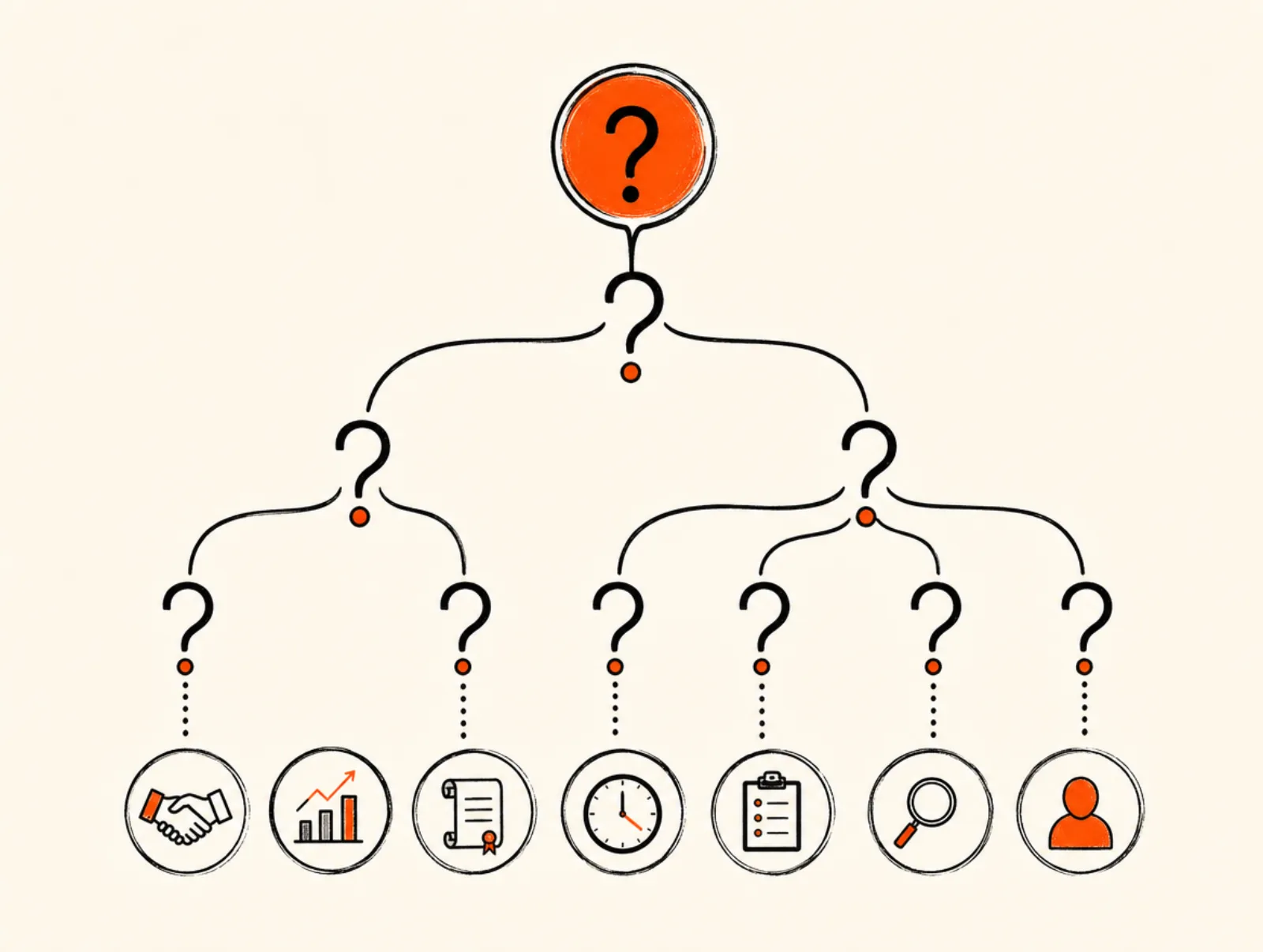
7 questions to ask a Shopify SEO agency before signing
Before signing a Shopify SEO agency, ask seven things: show me 3 D2C before/after traffic graphs; do you fix technical SEO or only write blogs; how do you handle product-variant duplicate content; what's your content cadence and who writes it; do you measure on revenue or just rankings; is your backlink strategy white-hat; and what do I keep if I leave?
1. Show me 3 Shopify D2C clients with before/after organic traffic graphs
Real Search Console / GA4 screenshots, not vanity charts. Your category if possible. If they can't produce three, they haven't done this enough.
2. Do you fix technical SEO or only write blog posts?
Many "SEO agencies" are content mills. Ask specifically about Core Web Vitals, schema, canonical handling, redirects. If they only talk content, they'll never move a technically broken store.
3. How do you handle Shopify product-variant duplicate content?
A Shopify-specific question that instantly separates specialists from generalists. If they don't know what you mean, they haven't done Shopify SEO.
4. What's your content cadence, and who writes it?
In-house writers who understand your category, or a freelance pool churning generic posts? The difference shows in whether the content ranks.
5. How do you measure performance — rankings, traffic, or revenue?
The right answer is revenue (organic-attributed), with rankings + traffic as leading indicators. Agencies that only report rankings are hiding behind vanity metrics.
6. What's your backlink strategy — and is it white-hat?
If they mention "guest post packages", "DA 50 sites", or bulk link building, walk away — that's PBN territory and a penalty risk. You want editorial outreach, digital PR, original-data link earning.
7. What's the engagement length, and what happens if I leave?
You should own all content, the GA4 / Search Console properties, and any technical work. Get it in writing.
The Shopify SEO mistakes that quietly kill rankings
The Shopify SEO mistakes that quietly kill rankings: deleted products that 404 instead of 301-redirecting, app bloat that tanks page speed, duplicate manufacturer copy, empty collection pages (the biggest missed opportunity), missing Product schema, faceted-navigation crawl traps, and treating SEO as "blog posts" rather than technical + structural + content + links.
- Deleted products that 404 instead of 301-redirecting to the category.
- App bloat injecting render-blocking JavaScript that tanks LCP.
- Duplicate manufacturer copy on product pages — ranks for nobody.
- Empty collection pages — the single biggest missed opportunity.
- Missing Product schema — losing rich-result stars + price in search.
- Faceted-navigation crawl traps — filter URLs eating crawl budget.
- Treating SEO as "blog posts" rather than technical + structural + content + links.
Tools we recommend
- Google Search Console — free, non-negotiable
- Google PageSpeed Insights — Core Web Vitals diagnosis
- Ahrefs or Semrush — keyword research + rank tracking + backlink analysis
- Screaming Frog — technical crawl audits
- GA4 — attribution + organic-revenue measurement
FAQ
What is Shopify SEO, and how is it different from regular SEO?
Shopify SEO is search-engine optimisation tailored to the Shopify platform's specific structure: product pages, collection pages, the way Shopify handles URLs and variants, its theme-level rendering, and its app ecosystem. Regular SEO principles apply (technical health, content, backlinks), but Shopify has platform-specific quirks — duplicate content from product variants, faceted-navigation crawl traps, JavaScript-rendered content, and a fixed URL structure (/products/, /collections/) — that need Shopify-specific handling. A generalist SEO who's never worked on Shopify will miss most of these.
How much does Shopify SEO cost in India in 2026?
Three models: monthly retainer (₹35,000–₹85,000/month for a competent specialist, ₹85,000–₹2,00,000 for an agency with content + technical + backlink teams), project-based (₹1,00,000–₹4,00,000 for a one-time technical audit + fixes), or hybrid (base retainer + performance bonus on organic-traffic milestones). For a D2C brand at ₹2L+/month ad spend, an ongoing retainer in the ₹50,000–₹1,00,000/month range is the typical sweet spot.
Should D2C brands hire a Shopify SEO agency or do it in-house?
Below ₹15L/month ad spend, an agency wins on cost — a senior in-house SEO costs ₹35L–₹65L CTC/year plus tool subscriptions (Ahrefs, Screaming Frog, etc.) totalling ₹50L+/year. An agency delivers the same competence for ₹6L–₹12L/year. Above ₹15L/month spend or ₹50 Cr ARR, hiring an in-house SEO lead + using an agency for overflow (content production, link building) becomes the better structure.
How long does Shopify SEO take to show results?
Honest timelines: technical fixes (Core Web Vitals, schema, redirects) show in 2–4 weeks once Google re-crawls. New content takes 2–4 months to rank for low-competition terms, 6–12 months for competitive ones. Backlink-driven authority gains compound over 6–18 months. Any agency promising first-page rankings in 30 days for competitive keywords is either lying or targeting keywords nobody searches. Realistic expectation: meaningful organic traffic lift by month 4–6, compounding from there.
What's the difference between Shopify SEO and Shopify development?
Shopify development builds and customises the store — theme, checkout, apps, headless setups on Hydrogen. Shopify SEO optimises that store to rank in search — technical health, content, structure, backlinks. They overlap on technical foundations (page speed, schema, URL structure are both dev and SEO concerns). The best results come when the same team handles both, because SEO requirements get built into the store rather than retrofitted. We build Shopify stores with SEO baked in from the theme up.
Does Shopify handle SEO automatically?
Partially. Shopify auto-generates sitemaps, handles canonical tags for variants, produces clean URLs, and is mobile-responsive out of the box. But it does NOT: optimise your page speed (theme-dependent), write your content, build your backlinks, fix faceted-navigation crawl traps, add product schema with ratings, or structure your collections for topical authority. The platform gives you a decent technical baseline — the ranking work is still yours to do.
Which Shopify theme is best for SEO?
Speed is the SEO-critical factor, and the fastest themes in 2026 are Shopify's own Dawn (and its descendants Sense, Craft, Refresh) — they're built on the Online Store 2.0 architecture and pass Core Web Vitals out of the box if you don't bloat them with apps. Premium themes vary wildly; many third-party themes ship with heavy JavaScript that tanks LCP. For maximum SEO performance, a custom theme or headless on Hydrogen beats any off-the-shelf theme — but Dawn-family themes are the best free starting point.
How do I fix duplicate content from Shopify product variants?
Shopify creates a URL for each variant (e.g., /products/shoe?variant=123). Left unmanaged, this fragments ranking signals across near-identical pages. Fixes: (1) ensure canonical tags point all variant URLs to the main product URL (Shopify does this by default — verify it in your theme), (2) don't link to variant URLs in internal navigation, (3) use the main product URL in your sitemap, (4) if you have products in multiple collections, the /products/ URL should be canonical, not the /collections/x/products/y path.
Should I use headless Shopify (Hydrogen) for better SEO?
Only if you have the engineering resources to do it right. Headless on Hydrogen can deliver superior Core Web Vitals (sub-1s LCP is achievable) and total control over rendering — which is great for SEO. But done wrong, headless introduces SEO risks: client-side rendering that Google can't crawl, broken canonical handling, missing schema. For most D2C brands under ₹50 Cr ARR, a well-optimised Online Store 2.0 theme beats a poorly-built headless setup. Go headless when page speed is a proven conversion bottleneck and you have the dev capacity.
How do I measure Shopify SEO performance?
Four layers: (1) Google Search Console — impressions, clicks, average position, which queries you rank for. (2) GA4 with enhanced ecommerce — organic sessions, conversion rate, organic-attributed revenue. (3) Shopify Analytics — organic traffic's share of total sessions and revenue. (4) Rank tracking (Ahrefs / Semrush) — position movement on target keywords. The metric that matters most is organic-attributed revenue, not rankings. Rankings are a leading indicator; revenue is the outcome.
What are the most common Shopify SEO mistakes?
The big ones: (1) Letting deleted products 404 instead of 301-redirecting to the category. (2) Bloating the theme with apps that inject render-blocking JavaScript and tank page speed. (3) Thin or missing product descriptions (manufacturer copy duplicated across the web ranks for nobody). (4) No collection-page content — collection pages are your highest-value ranking opportunity and most brands leave them empty. (5) Ignoring schema — products without Product schema (price, rating, availability) lose rich-result eligibility. (6) Treating SEO as 'blog posts' rather than technical + structural + content + links.

How this fits the bigger picture
Shopify SEO is one channel in the full D2C marketing stack. For the complete picture — paid media, creative, marketplace, attribution — see our D2C marketing pillar guide. If your CPMs are climbing and you're leaning harder on organic as a hedge, our breakdown of why CPMs keep rising explains the paid-side pressure. And if you want the store built with SEO baked in from the theme up, that's our Shopify development service.
⏤ Free audit
Get a free audit in 5 working days.
Read-only access to your Meta + Google Ads accounts. Full teardown of wasted spend, creative fatigue, and ROAS forecast. No obligation.

⏤ Working on something similar?
Get a free audit in 5 working days.
Read-only access to your Meta + Google Ads accounts. Full teardown of wasted spend, creative fatigue, and ROAS forecast. No obligation. Or jump straight to our Shopify development page.